
Whether managing seasonal retail displays, executing outdoor advertising campaigns, or organizing large-scale corporate events, inflatable decorations offer high visual impact and rapid setup. However, continuous exposure to outdoor elements, high foot traffic, and rough transport can occasionally lead to tears, seam separations, or punctures.
Knowing how to properly fix a hole in an inflatable decoration protects your investment, minimizes event downtime, and extends the operational life of your assets. In this guide, we break down step-by-step repair techniques for different materials and share key insights on structural durability.
1. Identifying the Leak: How to Find Small Punctures in Inflatable Props
Before applying a patch, you must accurately locate the source of the air loss. While large tears are obvious, micro-punctures require systematic testing.
The Soapy Water Method
Fully inflate the decoration using its internal or external blower.
Mix a few drops of mild liquid dish soap with water in a spray bottle.
Spray the solution lightly across suspect areas, focusing on high-stress zones such as seams, anchor points, and bottom corners.
Watch closely for expanding bubbles, which indicate escaping air.
Sound and Touch Detection
In quiet environments, run your hand 1 to 2 inches away from the fabric surface while the unit is inflated. Micro-leaks often create a subtle whistling sound or a distinct cool airflow against your skin.
2. Choosing the Right Repair Method Based on Material
Inflatable decorations are generally divided into two main structural types: constant-airflow inflatables (sewn) and air-tight inflatables (welded). Understanding your fabric type is critical for a durable repair.
| Material Type | Typical Construction | Common Applications | Best Repair Technique |
| PU-Coated Oxford / Nylon | Stitched seams, continuous blower | Holiday yard displays, event arches, advertising characters | Internal/external adhesive patch, seam re-stitching |
| PVC / Heavy-Vinyl | Heat-welded seams, sealed air valve | Floating water props, sealed arches, heavy-duty replicas | Solvent-based PVC glue with vinyl patch, thermal weld |
| Plush & Hybrid Fabrics | Fabric backing with outer pile | Mascot costumes, indoor promotional figures | Sub-surface backing patch with flexible textile adhesive |
3. Step-by-Step Guide to Patching Your Inflatable
Step 1: Clean and Dry the Surface
Turn off the blower and allow the inflatable to deflate completely. Clean the damaged area with isopropyl alcohol to remove dirt, grease, and residue. Ensure the material is completely dry before proceeding; moisture will weaken the adhesive bond.
Step 2: Cut and Fit the Patch
Select a matching material patch (most commercial inflatables include a repair swathing kit). Cut a circular or oval patch that extends at least 1 to 2 inches (2.5 to 5 cm) beyond the edges of the hole. Avoid sharp corners, as squared edges peel easily over time.
Step 3: Apply the Appropriate Adhesive or Sealant
For Oxford Fabric/Nylon: Apply a flexible, waterproof fabric adhesive or clear TPU repair tape. Press firmly from the center outward to push out air bubbles.
For Heavy PVC: Apply a thin, even layer of specialized PVC vinyl cement to both the patch and the damaged area. Allow it to become tacky (usually 30–60 seconds), then press firmly together.
Step 4: Curing and Air-Testing
Allow the adhesive to cure according to manufacturer instructions—typically 2 to 24 hours depending on the glue formulation. Once cured, power up the blower to inspect the repair under inflation pressure.
4. Common Repair Mistakes to Avoid
Using Standard Duct Tape: Standard tape adhesives break down rapidly under UV exposure and leave sticky residues that complicate permanent repairs.
Over-Tensioning Seams: Patching a seam while the unit is partially inflated can cause uneven stress and secondary tearing upon full inflation.
Ignoring Internal Cleanliness: Water or debris trapped inside the inflatable during wet-testing can cause mold, fabric deterioration, or blower damage over time.
5. Repair vs. Replacement: When Should B2B Buyers Upgrade Their Fleet?
While minor tears are easy to fix on-site, extensive damage—such as widespread UV degradation, rotting threads, or large torn anchor points—can compromise structural safety.
If a display unit requires frequent emergency repairs, replacing it with a professionally manufactured model constructed from high-tensile Oxford or reinforced PVC is generally more cost-effective.
6. How Manufacturing Quality Prevents Punctures and Wear
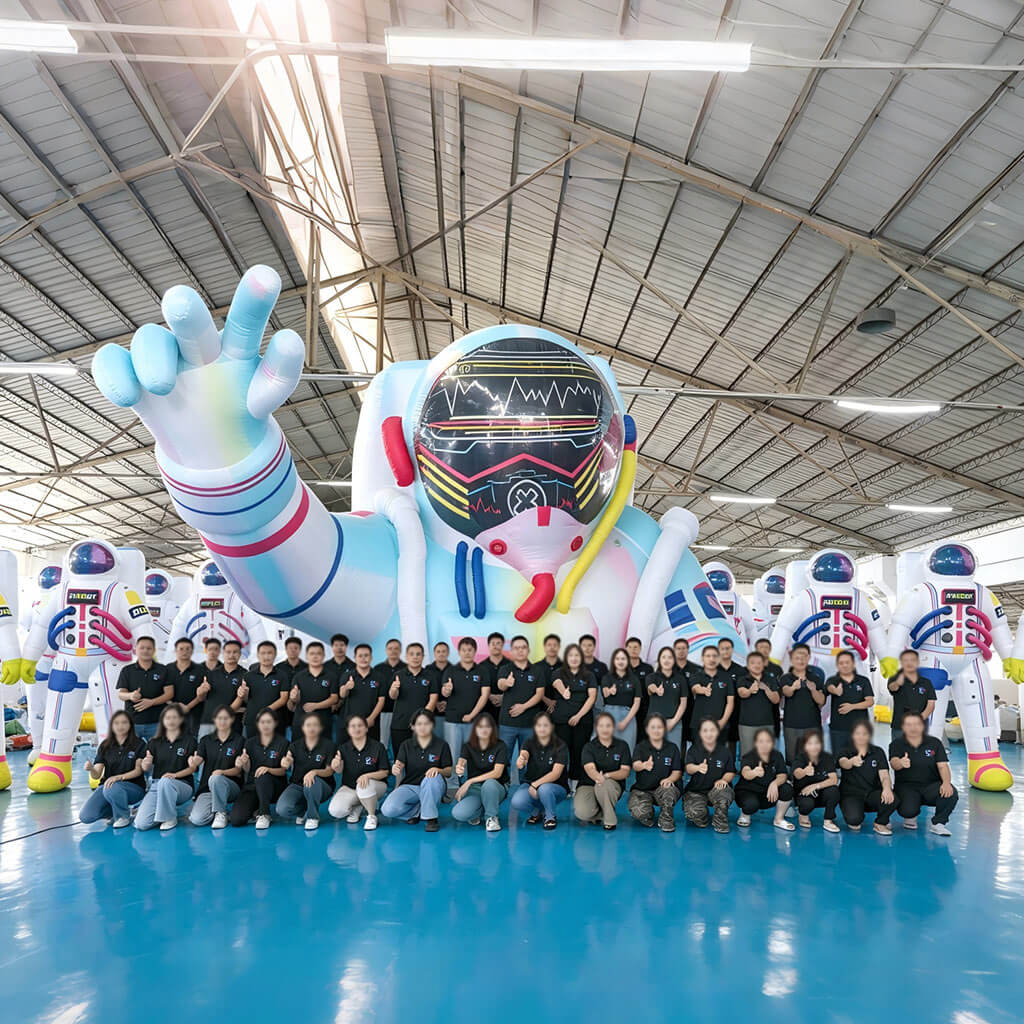
At our 4,000㎡ self-owned manufacturing facility, we leverage over 17 years of production expertise to build inflatables engineered for long-term durability.
With more than a dozen dedicated production stations and thousands of successful custom projects delivered worldwide, our in-house engineering team designs every product with key structural reinforcements:
Double-Stitched & Heat-Sealed Seams: Stress points and anchor loops feature reinforced stitching and heavy-duty webbing to prevent tears during high winds.
High-Fidelity Materials: We select premium Oxford fabric, durable PVC, nylon, and plush materials tailored specifically to your usage environment (indoor, outdoor, or wet conditions).
Realistic Craftsman Detailing: Advanced digital printing and precision cutting ensure high visual fidelity and color fastness without sacrificing fabric strength.
FAQ Section
Q1: Can I repair a seam split while the inflatable is plugged in?
No. Always unplug the blower and fully deflate the unit before attempting any repair to ensure proper adhesive bonding and safety.
Q2: What type of glue works best for Oxford fabric inflatables?
Flexible polyurethane adhesives or specialized TPU repair patches work best for Oxford fabric, maintaining flexibility under air pressure and folding.
Q3: How long do repaired patches usually last?
When executed correctly using high-grade adhesives and proper surface preparation, a patch can last as long as the base material under normal operating conditions.
Ready to Upgrade Your Commercial Inflatables?
Whether you need replacement display units, custom advertising inflatables, or advice on fleet maintenance, our expert design and production team is ready to assist.
[Contact Our Technical Sales Team Today] for a custom project quote, material swatches, or bulk procurement solutions.