
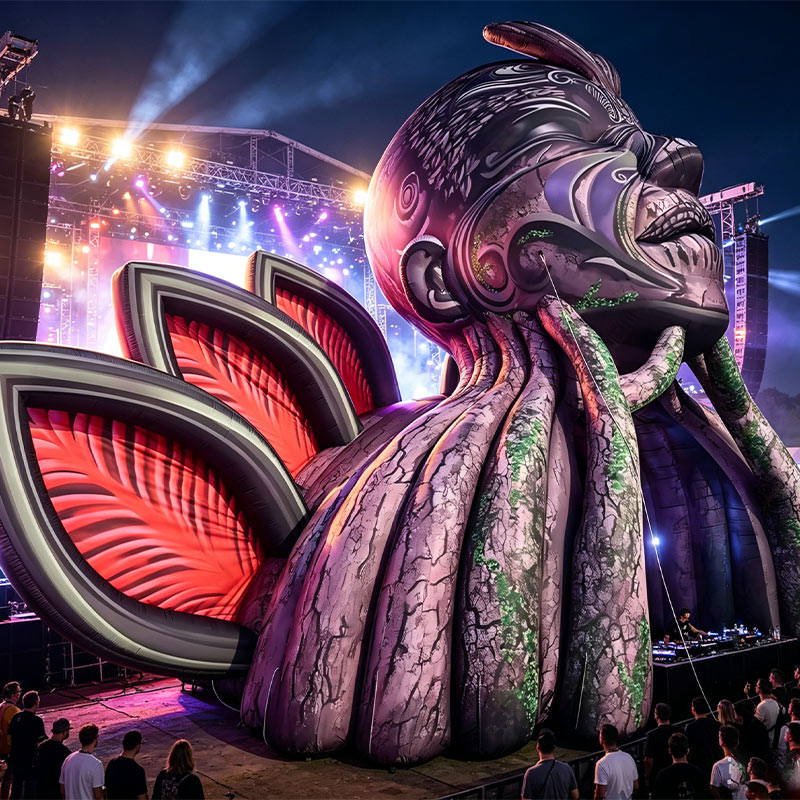
Inflatable decorations are widely used for retail promotions, holiday displays, events, and brand activations because they create strong visual impact and are relatively easy to customize. But even a well-designed inflatable can become unstable if it is not secured properly.
If you are trying to understand how to secure inflatable decorations, the main goal is not just appearance. It is safety, stability, and long-term usability. In many cases, installation problems come from using the wrong anchoring method, placing the inflatable on the wrong surface, or ignoring weather conditions.
This guide explains practical securing methods, common mistakes, and how B2B buyers can choose products that are easier and safer to install.
Why Securing Inflatable Decorations Matters
A decorative inflatable is more than a visual product. Once installed outdoors or in a busy event space, it becomes part of the physical environment.
Poorly secured inflatables may:
- tip over or lean
- shift during wind
- put stress on seams and stitching
- create safety risks for people nearby
- damage the blower or power cable
- reduce the product’s usable life
For wholesalers, importers, event companies, and retailers, this matters because a decorative product that is difficult to secure often leads to complaints, returns, or installation failures.
What Buyers Should Consider Before Installation
Before installation, buyers should think about the intended use scenario. The right securing method depends on several factors:
- indoor or outdoor use
- surface type
- wind exposure
- size and shape of the inflatable
- duration of display
- frequency of reuse
- whether the product will be installed by staff or end users
A manufacturer with real production experience usually considers these details during design. For example, a product made for a shopping mall entrance may need different reinforcement and anchoring points than one intended for a winter outdoor promotion.
How to Secure Inflatable Decorations Step by Step
1. Choose the right location
The first step is location selection. Even a stable inflatable can become problematic if placed in an exposed area.
Look for:
- a flat surface
- minimal sharp objects nearby
- enough space for blower ventilation
- reduced foot traffic around electrical components
- some protection from strong wind if possible
Avoid placing inflatables near sharp corners, loose debris, or unstable ground. These small issues often cause damage that could have been prevented at the setup stage.
2. Use the correct anchoring method
Different inflatable decorations usually need different securing systems. Common options include:
- stakes for grass or soil
- ropes or tie-down lines
- sandbags or weighted bases
- fixed anchor points for permanent or semi-permanent installations
The key is to match the anchoring method with the product size and the installation environment. Larger decorations generally need more secure tie-down points and stronger grounding support.
3. Match the securing method to the surface
Many installation problems happen because buyers use the same method on different surfaces. That rarely works well.
Grass or soil
This is usually the easiest surface for outdoor inflatables.
Typical methods:
- ground stakes
- tether ropes
- additional weights for larger models
Check the soil condition before installation. Soft or wet ground may reduce stake holding strength.
Concrete or hard pavement
Hard surfaces usually require alternative methods.
Typical methods:
- sandbags
- weighted plates
- fixed tie points
- temporary base systems
Do not rely on stakes where they cannot penetrate. That is a common and avoidable mistake.
Indoor venues
Indoor setups often depend more on weight and layout control than on weather resistance.
Typical methods:
- weighted bases
- concealed tie-down points
- venue-approved fixing systems
Indoor installs still need stability, especially in high-traffic spaces such as malls, trade shows, and exhibition halls.
Temporary event sites
Temporary sites can be unpredictable.
Typical methods:
- mixed anchoring systems
- extra weighting for wind protection
- cable management for power safety
This is where practical experience matters most. A product may look simple, but if it is used at a one-day promotion site, setup speed and stability become equally important.
4. Balance wind resistance and visual presentation
Some buyers focus only on how the decoration looks in photos. However, visible tie lines, anchor points, and weights are part of real-world installation.
The goal is to balance:
- appearance
- safety
- stability
- ease of setup
In many cases, a well-designed inflatable will include reinforced attachment points that support secure installation without affecting the overall visual effect too much. Fine workmanship and thoughtful structure design help here.
5. Check electrical and blower safety
A secure inflatable is not only about physical anchoring. Electrical safety matters too.
Before turning the product on:
- check that the power source is stable
- keep the cable away from walkways
- avoid placing the blower in water-prone areas
- confirm that ventilation is not blocked
- inspect the connector and plug condition
If the blower fails or is overloaded, the inflatable may lose shape and become unstable. For outdoor or event use, that can create both practical and safety issues.
How to Choose a Reliable Inflatable Manufacturer
A reliable manufacturer should not only make attractive products. They should also understand how the product will be installed and used in real conditions.
When evaluating a supplier, ask about:
- material options
- reinforcement at tie-down points
- usage environment recommendations
- custom design support
- installation guidance
- repairability and after-sales support
With 17 years of experience in the inflatable products industry, a 4,000㎡ self-owned factory, a strong in-house design team, and more than a dozen production stations, our production process has been shaped by thousands of project cases and worldwide export experience. That kind of background is useful because it helps identify practical installation issues before the product leaves the factory.
For B2B buyers, that often means fewer surprises during setup and better overall product performance.
Looking for custom inflatable decorations that are easier to install, safer to secure, and built for real commercial use?
Contact us to discuss your project requirements.